Permanent Sculpture
2023
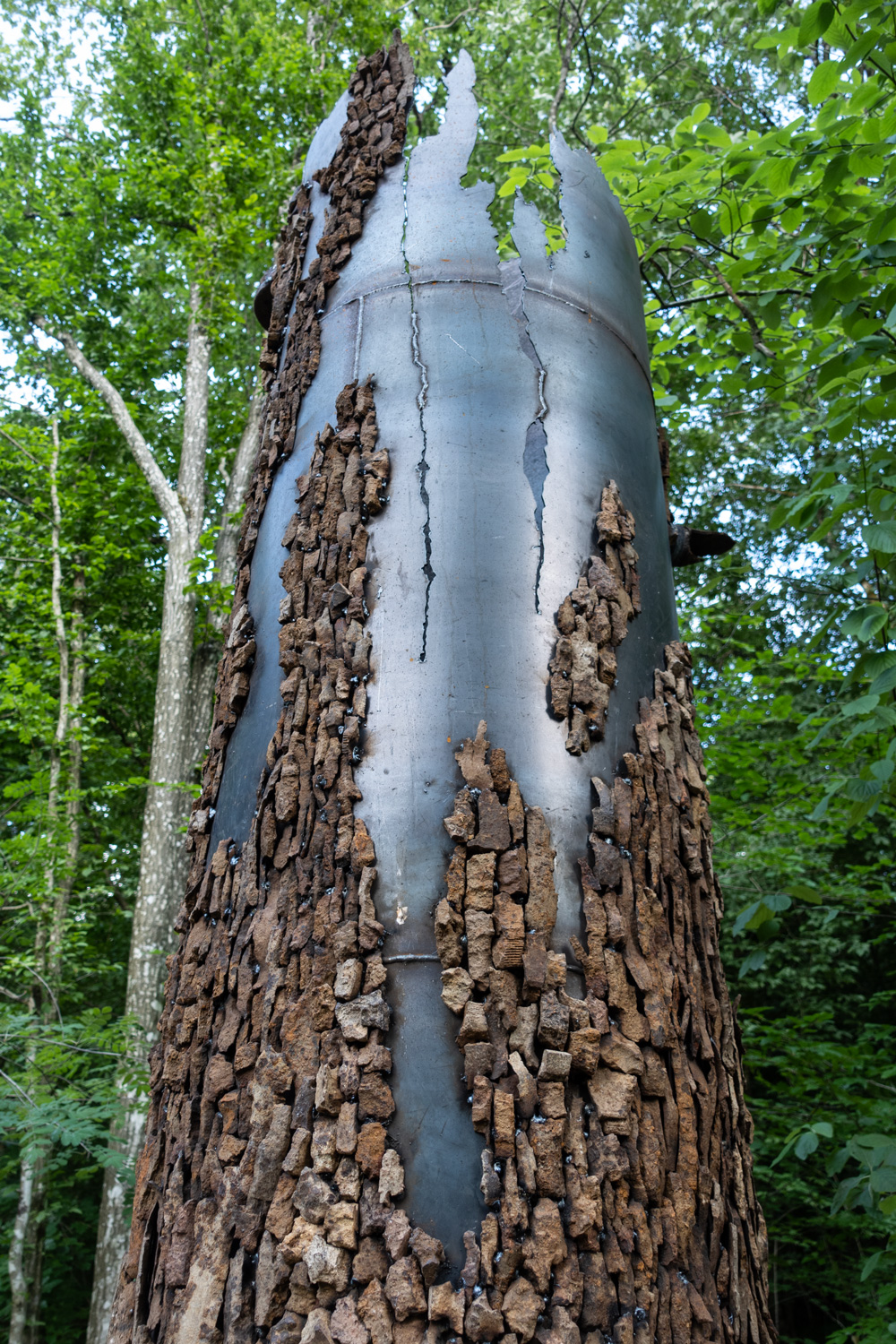
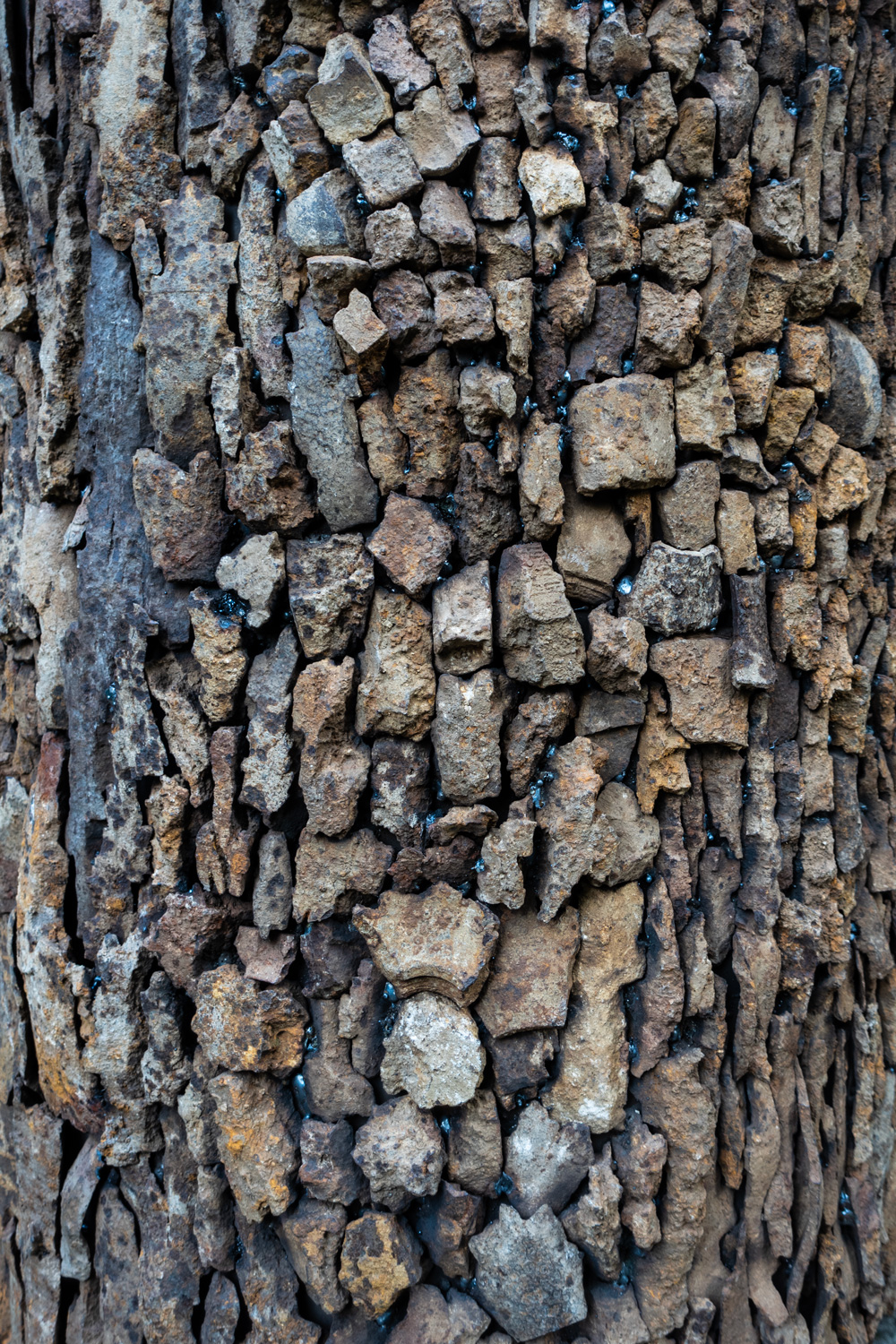
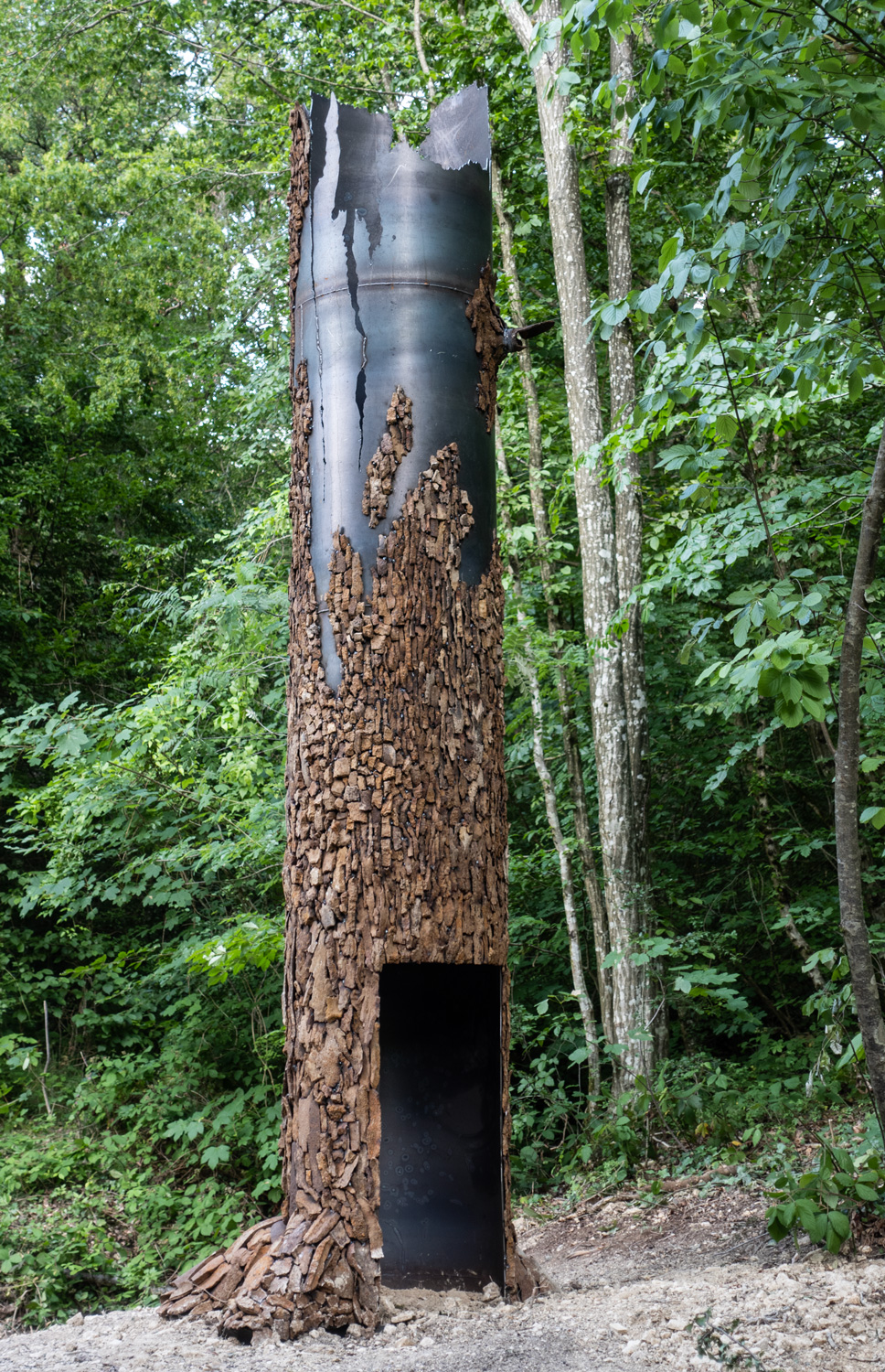
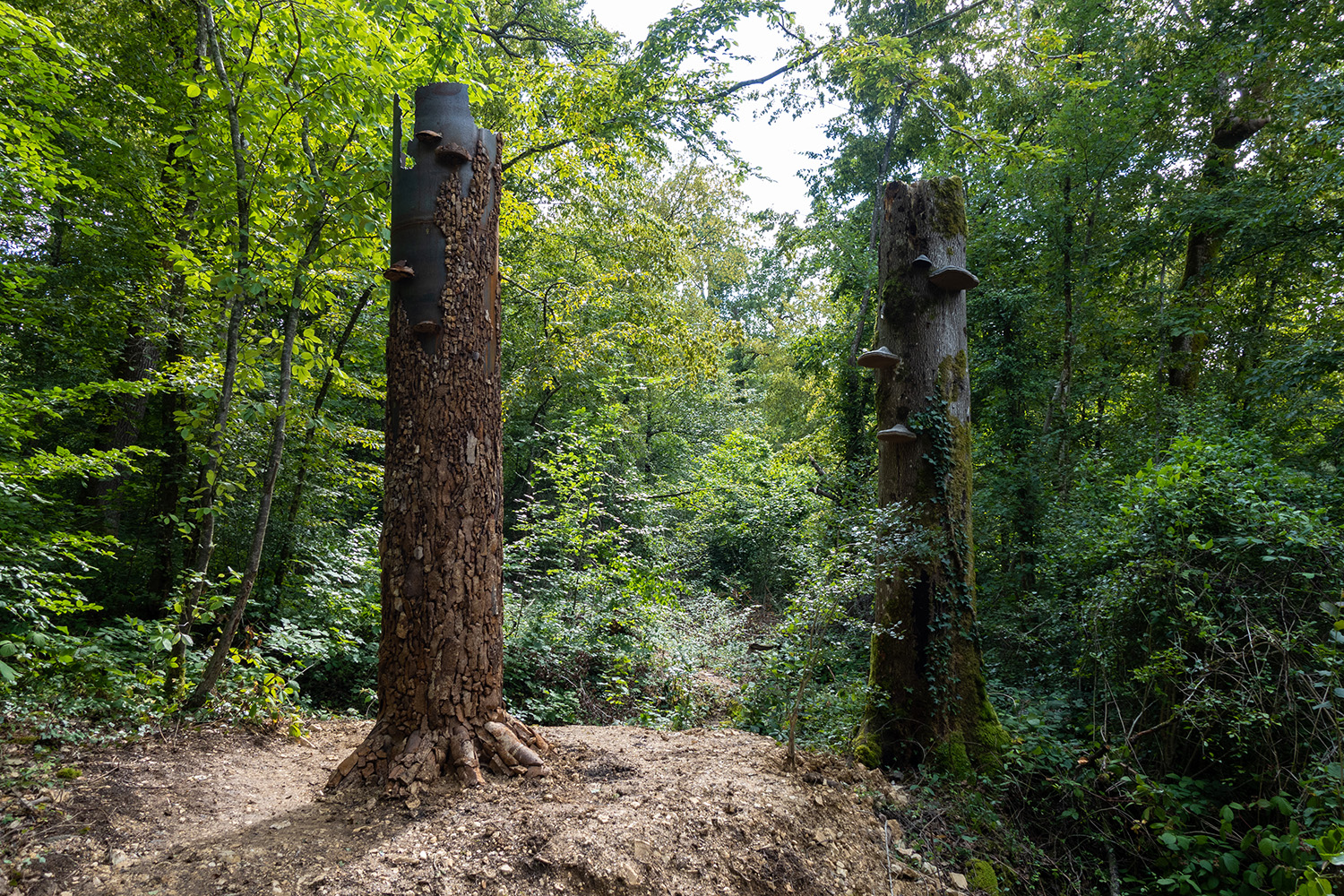
Déjà Vu is a permanent sculpture made from shrapnel collected in the fields and forests in northeastern France marked by World War I (1914–1918). These residues of rusty metals welded and assembled are strangely reminiscent of the bark of spruce trees ravaged by the bark beetle Ips typographus. The sculpture takes the form of an artificial tree, a replica of a nearby beech that succumbed to drought caused by climate change.
 Left: Sketch of the process of exchanging the real for the camouflage tree / Right: example of camouflage tree with opening on the bottom next to cut tree trunk (France, 1915)
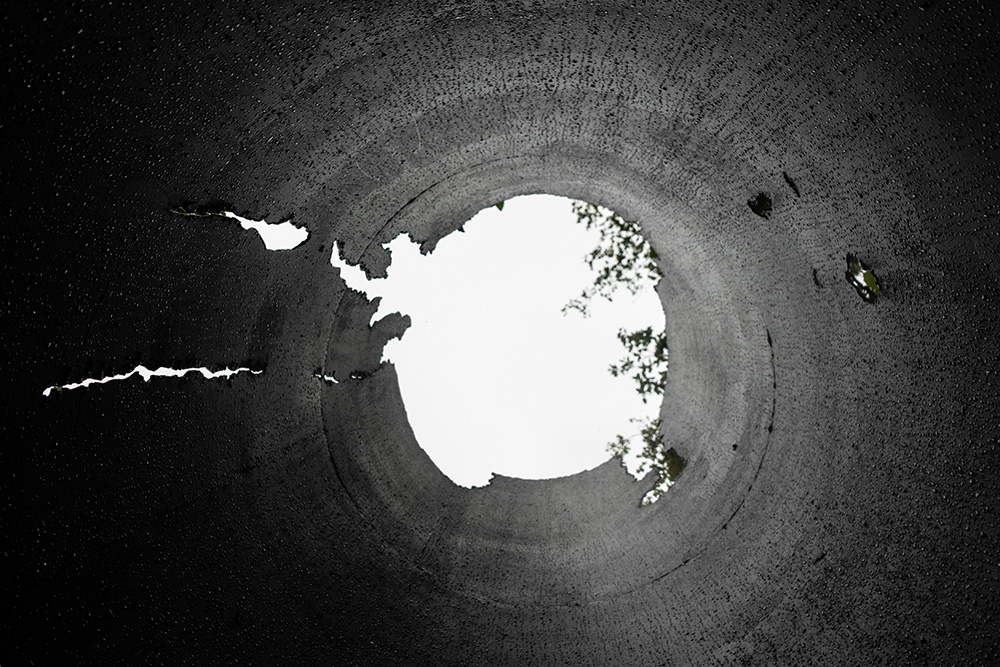
The work recalls the camouflage and observation structures designed in 1915 in Toul, in the studio of painter Lucien-Victor Guirand de Scaevola, for the French army. During the war, artists sketched no-man’s-land between the trenches, and sculptors and stage designers used these drawings to build lifelike replicas of shattered trees. At night, the real trees were felled and replaced with these copies, serving as concealed observation posts above the battlefield. The sculpture Déjà Vu will remain while the standing dead beech tree slowly decays, commemorating the impact of war on the landscape and ecological losses due to climate change.
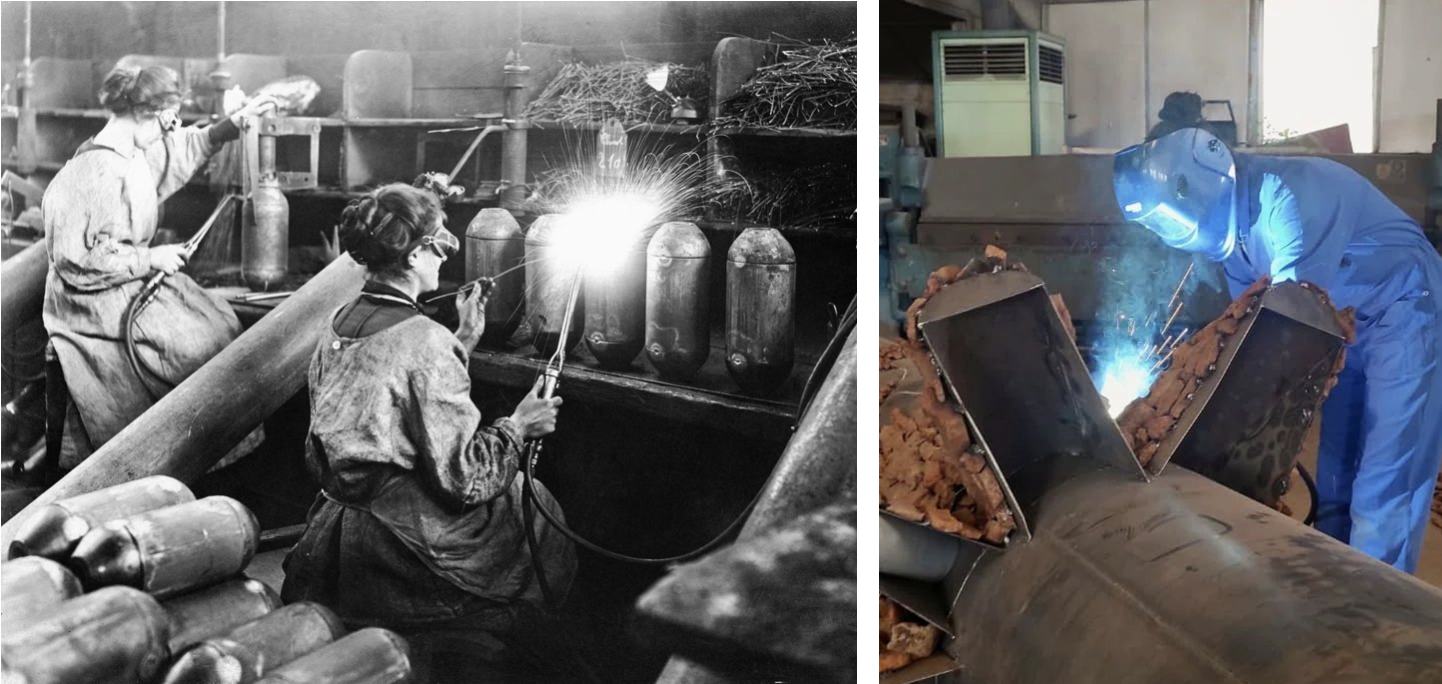 Left: Women munition workers at munition factory manufactoring bombs, 1916 / Right: Marjolijn Dijkman welding the sculpture with the collected shrapnel, 2023
The work is permanently installed in the forest part of the public sculpture parc on the former trenches part of the third line of the Saillant de Saint-Mihiel, not actively engaged during the war.
Déjà Vu is the first finalized work of the research project ‘Between the Lines,’ which focuses on the catastrophic effects of drought and climate change in the forests of the Zone Rouge in the northeast of France. It relates to the ongoing struggle to deal with the aftermath and remnants of the First World War within the global climate crisis, which impacted this particular landscape on a monumental scale.
Commissioned by: Vent des Forêts, Lorraine, FR
Materials: Welded metal structure shrapnel collected in former WWI battlefields in Verdun, Romagne-Sous-Montfaucon, and Saint-Mihiel.
Welding of the shrapnel: Marjolijn Dijkman
Production: Dominique Rennesson & Harald Demarthe (Chaudronnerie Rennesson, Chauvoncourt) and Cyril Renaudin (on-site installation)
The work was produced with the help of Service Interministériel de Défense et de Protection Civile Français – Centre de déminage de Metz (Metz); Douaumont Ossuary (Douaumont-Vaux); Farmers who authorized the search for shrapnel on their land: Jerome Pierret (Apremont-la-Forêt), Dominique Biget (Apremont-la-Forêt), Yoann Philippot (Ailly-sur-Meuse); Jean-Paul De Vries (Romagne ’14-’18, Romagne-Sous-Montfaucon); Guillaume Rouard (Office National des Forêts Verdun); Erna Kampman (Histoires du Saillant de Saint-Mihiel); Isabelle Bergot (Le center de documentation – Mémorial de Verdun); Francis & Karian Marchal (Saint-Mihiel); Thomas Bee, Léa Delvallez, Axelle Grapinet, Elimane Sylla (Service Civique Saint-Mihiel)
–
Supported by the Embassy of the Kingdom of the Netherlands, Paris, FR.